

Why Have Flexible Bearings Become the Core of Humanoid Robots? Analyzing Key Differen
Recently, the "catwalk" performance of the Xpeng Iron Robot has sparked a lot of discussion about humanoid robot technology. Its 15° hip swing and 0.3Hz gait error rely on flexible bearings for core technical support. As the key component of a harmonic reducer, flexible bearings have essential differences from traditional industrial bearings in design logic and performance requirements. These differences enable robotic joints to achieve flexible, bionic movement.
This article focuses on the core differences between flexible bearings and traditional bearings, and combines industrial application scenarios to analyze their technical uniqueness and industrial value, helping industrial readers gain an accurate understanding of this critical component.
I. Core Positioning Differences: Rigid Support vs. Elastic Transmission
The core function of a bearing is to "reduce motion friction," but flexible bearings and traditional bearings have completely different design goals and application scenarios, resulting in core positioning differences.
1.1. Traditional Industrial Bearings: Focused on "Rigid Stability"
The core goal is to provide rigid support, preventing deformation during movement and ensuring the stability of the equipment.
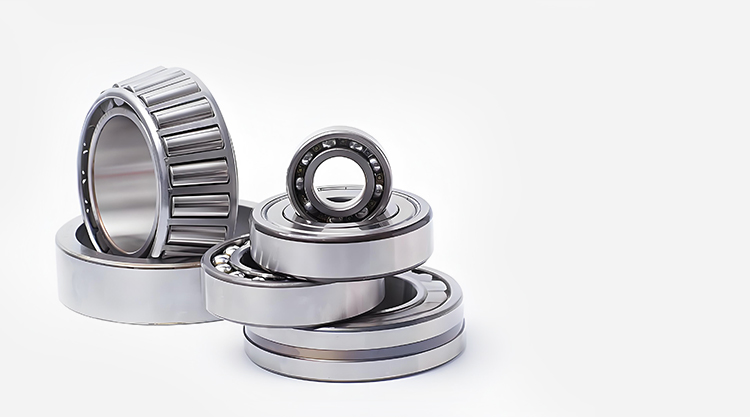
Application scenarios include motors, machine tools, and construction machinery, emphasizing low-friction transmission along fixed paths, such as deep groove ball bearings for motor shaft support, and self-aligning bearings for heavy-duty equipment.
1.2. Flexible Bearings: Focused on "Elastic Adaptation"
The core goal is to achieve high reduction ratios and precise transmission through controllable elastic deformation, adapting to complex motion trajectories.
Specifically designed for harmonic reducers, flexible bearings are the core component of humanoid robot joints, enabling movements such as waist rotation and delicate hand gestures in Xpeng robots.
II. Key Performance Differences: A Comprehensive Comparison Across 5 Dimensions
Flexible bearings and traditional bearings (such as deep groove ball bearings, needle bearings, and self-aligning bearings) differ significantly in structure, precision, deformation ability, and other core metrics, directly determining their irreplaceability in application scenarios.
| Comparison Dimension | Flexible Bearings | Traditional Industrial Bearings |
|---|---|---|
| Structural Design | Thin-walled raceway + High fill ball angle (over 263°), no cage, adaptable to elastic deformation | Rigid raceway + Cage, fixed structure, emphasizes resistance to deformation |
| Core Features | Controllable elastic deformation (±5%), combining transmission and cushioning functions | Rigid support, no active deformation ability, only reduces friction |
| Precision Metrics | Repeat positioning accuracy of 0.01mm, geometric tolerance ≤3μm | Standard precision 10-20μm, precision grade can reach 5μm, no deformation adaptation precision |
| Service Life | Over 2 million cycles (adapted to the high-frequency movements of robots) | Based on speed calculation, industrial scenarios can last tens of thousands of hours, but not resistant to high-frequency deformation |
| Applicable Scenarios | Humanoid robot joints, harmonic reducers, precision transmission equipment | Motors, machine tools, construction machinery, general mechanical scenarios |
III. Design Logic Differences: Adapting to Complex Motion vs. Meeting Fixed Requirements
3.1. Flexible Bearings: Custom-Made for "Bionic Movement"
Thin-walled Structure Design: The raceway thickness is only 1/3 to 1/2 of traditional bearings, allowing for elastic deformation within a certain range, enabling flexible wheels and rigid wheels to mesh and transmit motion. No Cage and High Fill Ball Angle: Maximizes the contact area between the steel balls, disperses deformation stress, and prevents local wear caused by high-frequency deformation, ensuring the stability of the "catwalk" movement in Xpeng robots. Material Ratio Optimization: Balances the elastic limit and anti-fatigue strength, preventing fracture or plastic deformation after repeated deformation.
3.2. Traditional Industrial Bearings: Optimized for "Stable Operation"
Rigid Structure Design: The raceway is thick, and the structure is sturdy to prevent deformation during operation, ensuring a fixed transmission path. Cage Design: Prevents steel balls from rubbing against each other and improves stability during high-speed rotation, but limits deformation space. Material Focus on Wear Resistance: Prioritizes high hardness materials to reduce wear in fixed trajectory applications without considering elastic adaptation needs.
IV. Application Scenario Differences: Why Traditional Bearings Can't Replace Flexible Bearings
The bionic movement requirements of humanoid robots make traditional bearings unsuitable, while the unique design of flexible bearings solves this core problem.
4.1. Limitations of Traditional Bearings
Cannot Achieve Elastic Transmission: The rigid structure of traditional bearings cannot drive the flexible wheel of the harmonic reducer, and cannot achieve high reduction ratio and precise transmission.
Deformation Easily Leads to Failure: If used in robot joints, high-frequency deformation can cause raceway cracking or steel ball detachment, leading to a service life of fewer than 1,000 cycles.
Poor Spatial Adaptability: Traditional bearings lack compactness and cannot meet the narrow installation space requirements of humanoid robot joints.
4.2. The Irreplaceability of Flexible Bearings
Deformation and Precision Balanced: Within a ±5% elastic deformation range, flexible bearings can still maintain 0.01mm-level positioning accuracy, adapting to the complex movement trajectories of robot joints.
Cushioning and Vibration Absorption: They can absorb motion impacts, reduce joint stress concentration, and make the Xpeng robot's "catwalk" more natural, avoiding mechanical stiffness.
Lightweight and Compatible: The compact structure and high load-bearing capacity allow flexible bearings to balance the 18kg single-axis load and flexible motion, meeting humanoid robots' lightweight design requirements.
V. Conclusion
The "catwalk" of the Xpeng robot is a direct reflection of the maturity of flexible bearing technology. Compared with traditional bearings, flexible bearings focus on "elastic transmission" and have unique advantages in structure, precision, and application scenarios, making them a core and irreplaceable component in the humanoid robot industry.
-
07 2025.11Low-Temperature Bearing Core Issues Explained: Comprehensive Coverage for Industrial
This article focuses on four core challenges of low-temperature bearings in industrial settings.
-
07 2025.11Silicon Carbide Bearings
This article will focus on the irreplaceable advantages and practical application scenarios of silicon carbide bearings, using real-world data and case studies to illustrate how they reduce costs and
-
07 2025.11Characteristics and Types of Different Bearings
This article systematically outlines the classification, core characteristics, and applicable scenarios of mainstream bearings, providing practical reference for industrial practitioners while helping
-
07 2025.11High-Speed Equipment Bearing Selection Guide
This paper systematically analyzes the selection logic for high-speed bearings and provides actionable technical solutions tailored to industrial application scenarios.