

Four-Point Angular Contact Bearings: Empowering All Scenarios with Distinctive Featur
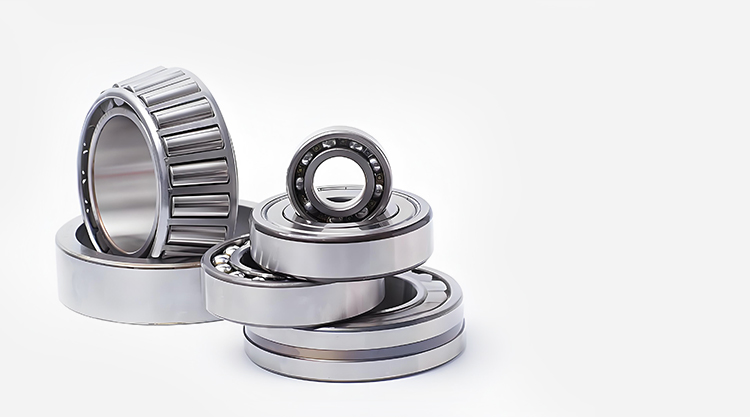
With its unique four-point contact structure and bidirectional load-bearing capability, the four-point contact ball bearing has become a preferred core component in industrial scenarios requiring high precision and heavy loads. Its differentiated features not only break through the performance limitations of traditional bearings, but also enable precise adaptation across diverse industrial applications, providing key support for efficient and stable equipment operation.
This article focuses on the core features and typical application scenarios of four-point contact ball bearings, offering an in-depth analysis of their industrial value to help professionals quickly grasp product advantages and selection essentials.
I. Core Features of Four-Point Contact Bearings: Breaking Tradition, Upgraded Performance
1.1 Four-Point Contact + Double-Raceway Design for Comprehensive Load-Bearing Enhancement
This is the most fundamental structural feature of the four-point contact bearing. The steel balls form four evenly distributed contact points with the double-arc raceways of the inner and outer rings, increasing the load-bearing area by more than 50% compared with single-row angular contact bearings. It can stably withstand radial loads, bidirectional axial loads, and overturning moments at the same time, achieving bidirectional axial load capacity without the need for paired installation, greatly simplifying assembly and reducing installation space. For example, in heavy-duty equipment, four-point contact bearings offer more than three times the anti-overturning moment of deep groove ball bearings under the same size, effectively preventing shaft tilting and deformation.
1.2 High Precision and Low Friction for High-Speed and Challenging Conditions
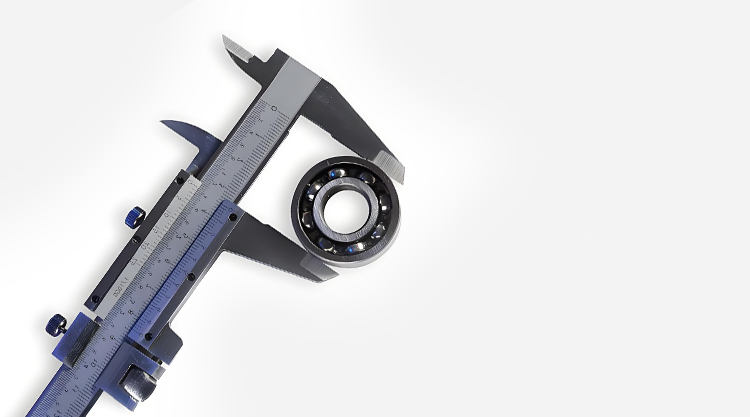
Four-point contact bearings adopt precision grinding processes, with raceway surface roughness controlled within 0.02 μm, reaching P2/P4 high precision grades. Radial runout error is ≤0.003 mm, meeting strict accuracy requirements for precision transmission. The optimized raceway curvature combined with cage-guided design reduces friction coefficient by 40% compared with traditional bearings, boosting limiting speed by 30%–50%. Noise remains below 60 dB during high-speed operation, while energy loss is reduced, aligning with the trend toward energy-saving industrial equipment.
1.3 Compact Structure + High Customizability for Complex Installation Conditions
The integrated structural design allows four-point contact bearings to be 20%–30% smaller than combined bearings while providing the same load capacity, making them ideal for equipment with limited installation space. They support multidimensional customization, allowing adjustment of contact angles (15°/25°/40°), use of ceramic rolling elements, or special coatings (such as DLC), making them suitable for high-temperature, corrosive, or dusty environments. Service life is extended by 2–3 times compared with standard bearings.
1.4 Upgraded Sealing Protection for Lower Maintenance Costs
Configurable with double-sided rubber seals, labyrinth seals, or contact seals, the protection level can reach IP67, effectively blocking dust, oil, and moisture. In harsh conditions, sealing performance improves by 60% over typical bearings. The combination of sealing design and precision processing extends maintenance cycles to over 8,000 hours, significantly reducing equipment downtime and overall operational cost.
II. Typical Application Scenarios: Matching Features to Boost Key Equipment Performance
| Machine Tools: The “Stable Core” of High-Precision Machining | Application: Spindle units of CNC lathes, machining centers, grinders. Feature Match: P2/P4 high precision ensures minimal radial runout during spindle high-speed rotation. The four-point contact structure withstands combined radial and bidirectional axial loads during cutting, and its high anti-overturning capability prevents spindle tilt, improving surface finish and dimensional accuracy. After the adoption of four-point contact bearings in a precision grinder, part tolerance fluctuation narrowed to ±0.001 mm, increasing productivity by 20%. |
|---|---|
| Industrial Robots: The “Flexible Pivot” of Joint Motion | Application: Joints of welding robots, palletizing robots, and collaborative robots. Feature Match: Compact structure fits tight joint spaces; bidirectional load capacity supports frequent forward–reverse rotations; low friction ensures smooth and precise joint motion with low noise and fast response. In a 50 kg-load palletizing robot, four-point contact bearings enable over one million cycles without failure, maintaining positioning accuracy within ±0.1 mm, significantly improving stability and service life. |
| Aerospace: The “Reliable Performer” in Extreme Environments | Application: Aircraft engines, missile launch systems, satellite attitude adjustment mechanisms. Feature Match: Using high-temperature bearing steel and ceramic rolling elements, they operate stably from -50°C to 300°C. The four-point contact structure disperses complex loads under high temperature and pressure, offering strong impact resistance. In aircraft engines, they withstand tens of thousands of RPM while handling both axial thrust and radial loads, achieving a continuous operation reliability of 99.9%, directly supporting equipment safety. |
| New-Energy Vehicles: The “Efficiency Key” of High-Performance Drive Systems | Application: Drive motors, gearboxes, steering systems. Feature Match: Low friction reduces motor energy loss, enhancing driving range (tested improvement: 5%–8%). Bidirectional load capacity withstands load shocks during frequent shifting. Advanced sealing resists oil contamination and moisture inside motors. After adopting four-point contact bearings, a new-energy automaker extended motor lifespan to 200,000 km and reduced failure rate by 35%. |
III. Selection Tips for Four-Point Contact Bearings
Scientific Selection: Matching Operating Conditions is Key
| Load Parameters | Select the contact angle according to actual radial and axial loads and load direction. Bearings with a 40° contact angle are preferable for heavy axial loads; 15° models are suitable when radial load is dominant. |
|---|---|
| Speed Requirements | Refer to the bearing’s limiting speed based on the equipment’s operating speed. For high-speed applications, consider ceramic rolling elements or reinforced cage designs to prevent overheating. |
| Precision Grade | Precision equipment (such as machine tools and robots) should use P4 or higher precision grades. General machinery may select P5 or P6 to balance precision and cost. |
As a key component in industrial transmission systems, the unique structure and superior performance of four-point contact bearings make them indispensable in high-precision, heavy-load, and high-speed industrial scenarios.
-
19 2025.11What is High-Temperature Corrosion? A Comprehensive Analysis of Causes, Hazards
This article provides a comprehensive analysis of high-temperature corrosion, delving into its causes and hazards. It presents scientifically sound protective measures grounded in industrial practice,
-
19 2025.11Three Major Application Restrictions for Ceramic Hybrid Bearings
Understanding the application restrictions of ceramic hybrid bearings can prevent equipment failures and extend service life, making it a critical factor in the selection process.
-
19 2025.11Key Differences and Advantages of Crossed Roller Bearings Compared to Standard Bearin
Crossed roller bearings exhibit fundamental differences from conventional bearings such as deep groove ball bearings and cylindrical roller bearings in terms of structural design, load capacity, and p
-
19 2025.11Why Have Flexible Bearings Become the Core of Humanoid Robots? Analyzing Key Differen
This article focuses on the core differences between flexible bearings and traditional bearings. By examining industrial application scenarios, it analyzes their technical uniqueness and industrial va