

What Are Full-Complement Ball Bearings?
In industrial machinery, bearings are key components whose performance directly affects the stability and service life of the entire machine. Among them, “full complement bearings” are widely used in engineering machinery, motors, gearboxes, hydraulic equipment, and other industries due to their high load capacity, compact structure, and long service life.
This article provides a comprehensive introduction to the structural features, advantages, selection points, and typical application fields of full complement bearings, helping users better understand and choose suitable full complement bearing products.
I. What Is a Full Complement Bearing?
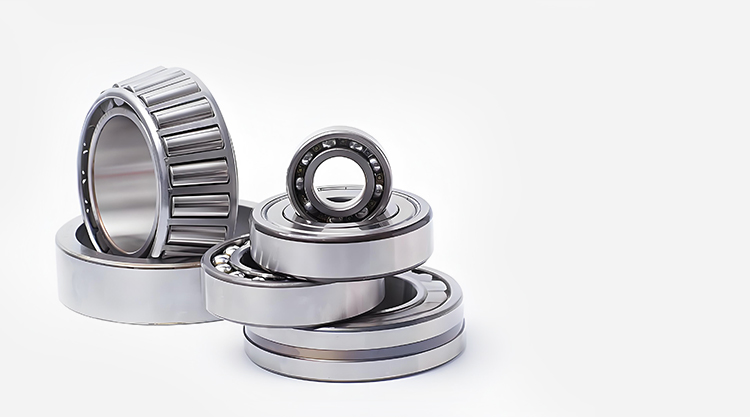
A full complement bearing is a special bearing structure in which the space between the inner and outer rings is completely filled with rolling elements (balls or rollers). Unlike conventional bearings with cages, full complement bearings eliminate the cage, allowing for more rolling elements and thus improving load capacity.
II. Structural Features of Full Complement Bearings
| Cage-free design | Full complement bearings remove the cage, allowing rolling elements to fill the entire available space, making the structure more compact. |
|---|---|
| More rolling elements | Compared with standard bearings, full complement bearings can accommodate more balls or rollers within the same dimensions. |
| Higher load capacity | The increased number of rolling elements provides a larger contact area, giving full complement bearings excellent radial load-carrying capability. |
| Suitable for low-speed, heavy-load conditions | Although they offer high load capacity, full complement bearings are generally not ideal for high-speed operation and perform best in low-speed, heavy-load environments. |
III. Advantages of Full Complement Bearings
| High load capacity | This is the most notable advantage of full complement bearings, making them highly reliable in heavy-load applications such as construction and mining machinery. |
|---|---|
| Compact structure | They provide high load capacity within limited space, making them suitable for compact equipment designs. |
| Stable operation and long service life | With more rolling elements and more evenly distributed load, full complement bearings exhibit greater fatigue resistance. |
| Reliable under shock loads | The full complement design eliminates the risk of cage breakage, providing greater reliability under sudden shock loads. |
IV. Application Scenarios of Full Complement Bearings
Full complement bearings are widely used in:
| Construction machinery | Excavators, loaders, concrete mixing equipment |
|---|---|
| Motors and gearboxes | Especially heavy-duty gear reducers and planetary gearboxes |
| Mining equipment | Crushers, screening machines |
V. Conclusion
Due to their cage-free design, high load capacity, and compact structure, full complement bearings perform exceptionally well in heavy-load and low-speed applications. They are essential components in engineering machinery, mining equipment, and metallurgical machinery. To enhance equipment stability and service life, it is crucial to select the appropriate full complement bearing model and maintain it properly.
-
28 2025.11The Four Lubrication Methods for Bearings
This article provides an in-depth industry overview of four common bearing lubrication methods .
-
28 2025.11Differences Between High-Temperature Alloy Steel and Ordinary Bearing Steel
This article will provide a comprehensive analysis from core dimensions to help you accurately distinguish the differences between high-temperature alloy steel bearings and ordinary bearing steel bear
-
28 2025.11How to Clean and Prevent Rust on Stainless Steel Bearings?
This article provides a detailed solution to the core question of “How to Clean and Prevent Rust on Stainless Steel Bearings,” sharing scientific operational methods and important considerations.
-
28 2025.11Why do bearings turn blue or black? Can they still be used?
During the operation of industrial equipment, bearing discoloration serves as a critical visual indicator that should not be overlooked. It often manifests as an external symptom of internal equipment